 Harry Potter and the Miracle that Descended Upon Me (Yuko Matsuoka’s Memoir)
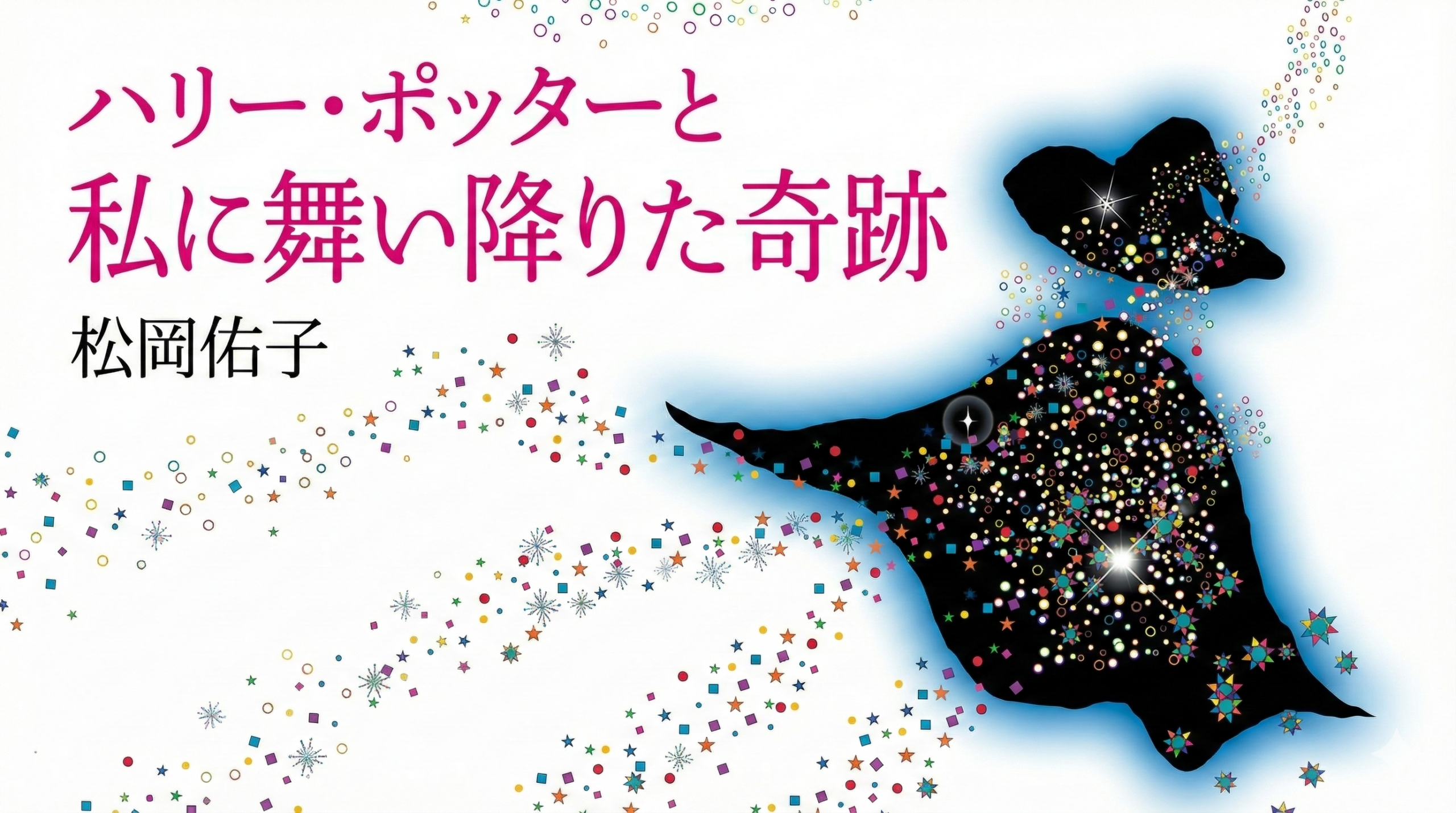
I recently got my hands on a book by Yuko Matusoka (the Japanese translator of Harry Potter)—it’s memoir accounting the impact that translating Harry Potter had on her life. The title, ハリー・ポッターと私に舞い降りた奇跡1 (harii pottaa to watashi ni maiorita kiseki), translates as “Harry Potter and the Miracle that Descended Upon Me” in English.
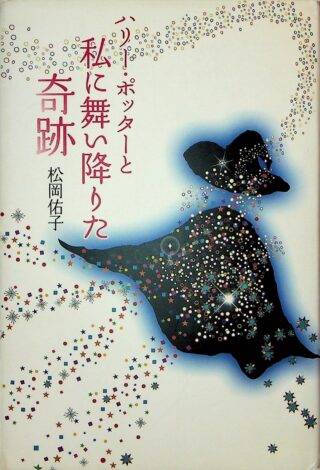
It will be a while before I’m able to extract everything I want from this book—although Japanese is my best second language, I am by no means a fluent reader! That said, I’ve started some initial AI-assisted investigation—say what you will about AI, but for exploring multilingual resources, it is invaluable.
The first thing I will provide is this AI-generated audio overview. It is about 12 minutes long and in a podcast format created by Google’s Notebook LM. It is a quick and engaging listen!
And what follows is a quick synopsis of each chapter (also generated by Notebook LM). More insights to come!
Prelude to a Miracle (奇跡への前奏曲)
In 1998, Yuko Matsuoka, then a simultaneous interpreter, visited her long-time friend Dan Schlesinger in London. During this trip, Dan and his wife, Alison, introduced her to the first Harry Potter book, which was then a nascent sensation in the UK. Matsuoka read the book overnight and was so enchanted by the story that she felt it was a “gift from heaven” meant for her to translate. She immediately contacted J.K. Rowling’s agent, Christopher Little, to begin negotiations for the Japanese publishing rights. This section also introduces the “jigsaw puzzle” metaphor of her life, where her past friendships and experiences suddenly aligned to make this project possible.
A Long Road (長い道のり)
Matsuoka reflects on her upbringing in Fukushima, describing herself as a studious “bookworm” who shared many personality traits with Hermione Granger. She details her intense focus on learning English, which led her to leave home at fifteen to attend a prestigious high school in Sendai. Despite her parents’ eventual divorce and their initial opposition to her choices, she insisted on enrolling at International Christian University (ICU) to pursue her passion for language. At ICU, she met her first husband, Yukio Matsuoka, a philosophical student who would later influence her career profoundly.
Onto the World Stage (世界を舞台に)
After university, Matsuoka’s career began at the Association for Overseas Technical Scholarship (AOTS), a role she secured despite accidentally missing her initial interview date. She received rigorous training in professional conduct and interpretation, eventually becoming a skilled simultaneous interpreter. This section follows her transition into freelance work, where she began travelling the world for high-level international conferences. She describes the immense pressure and preparation required for the job, often studying technical materials late into the night while balancing domestic duties for her husband.
Parting with a Partner (伴侶との別れ)
This section focuses on her husband Yukio’s career and his eventual diagnosis with terminal lung cancer. After leaving his previous job, Yukio founded Say-zan-sha, a small publishing house focused on social history and human rights. Through his publishing work, he became deeply involved in supporting patients with ALS (Amyotrophic Lateral Sclerosis) and founded the Japan ALS Association. Yukio spent his final years tirelessly advocating for patient rights and dignity, eventually passing away on Christmas Day in 1997. Matsuoka resolved to keep his small, struggling publishing house alive as his legacy.
The Translation My Life Was Staked On (人生を賭けた翻訳)
Staking her life on the success of Harry Potter, Matsuoka tackled her first-ever literary translation for “The Philosopher’s Stone”. She sought guidance from experienced translator Gerry Harcourt and studied children’s literature to develop a natural, engaging Japanese voice for the characters. In May 1999, she travelled to London for a first meeting with J.K. Rowling at the Savoy Hotel. They discussed character inspirations, such as Hermione being based on Rowling’s younger self, and the challenges of translating Rowling’s rhythmic wordplay and invented magical terms.
Bookmaking by a Group of Amateurs (素人集団の本づくり)
Matsuoka describes the creation of the Japanese editions as the work of an “amateur group” fueled by passion rather than experience. She convinced Dan Schlesinger to create the cover art and interior illustrations, leading to a fruitful but sometimes contentious artistic collaboration. Lacking a marketing budget, Matsuoka used her husband’s life insurance payout to fund the initial printing and spent months personally visiting bookstores across Japan to pitch the unknown series to skeptical managers. During this time, she even joked that she would enter a nunnery if the book failed to sell.
And the Miracle Descended (そして奇跡は舞い降りた)
Upon the release of the first volume in December 1999, an immediate “miracle” occurred as phones began ringing incessantly with orders. The book became a massive bestseller within a month, necessitating rapid reprints. Matsuoka and her small staff were overwhelmed by the response, particularly the flood of fan mail from children and adults alike. She made a point of replying to every reader card personally, a task that became increasingly difficult as the series grew. This section also includes a brief summary of the first volume’s plot, highlighting the introduction of Harry’s magical world.
A New Development in 2001 (二〇〇一年の新展開)
This section covers the release of the second volume and Matsuoka’s continued commitment to her late husband’s ALS advocacy. In late 2000, she accompanied three ALS patients on a grueling trip to a conference in Denmark to successfully bid for Japan to host the International ALS Symposium. Amidst this busy period, she unexpectedly reconnected with Bob Harris, an Australian she had met decades earlier at an international meeting. Their rekindled connection eventually led Matsuoka to decide to immigrate to Switzerland to begin a new life with him.
The Halfway Point (折り返し地点)
As the series reached its midpoint with “The Goblet of Fire”, the books grew significantly longer, placing a heavier burden on Matsuoka’s translation schedule. She describes the physical and mental toll of the work, often subsisting on “space food” or simple rice balls to save time. This period also marked the beginning of the Harry Potter film adaptations; Matsuoka took on the additional responsibility of supervising the Japanese subtitles and dubbing to ensure they remained faithful to her translation of the books. She even began dressing in a witch’s costume for bookstore release events to connect with fans.
The Veil of Secrecy (秘密のベール)
As the global Harry Potter phenomenon intensified, the author and her UK publisher implemented a “veil of secrecy” around the manuscripts to prevent leaks. Matsuoka explains the difficulty this caused for international translators, who were no longer allowed to see the text before the English release date. She struggled with choosing appropriate titles, such as the ambiguous word “Order” in the fifth volume, based on minimal information from agents. This section also covers the rise of unauthorised online translations, which her team worked to monitor and discourage with the help of the fan community.
Carrying the Thoughts of Loved Ones (愛する人々の思いを乗せて)
While translating the darker sixth volume, Matsuoka suffered the personal tragedy of losing both her father and mother within two months of each other in late 2005. She channelled her grief into the translation, particularly for scenes involving the death of beloved characters. Simultaneously, she successfully oversaw the ALS International Symposium in Yokohama, fulfilling Yukio’s final wish. The section ends on a hopeful note with Matsuoka’s formal engagement and subsequent marriage to Bob Harris in 2007, an event attended by her international circle of friends.
A Gift from Harry Potter (ハリー・ポッターからの贈り物)
The final section reflects on the ten-year journey of translating the entire series, culminating in the release of “The Deathly Hallows”. In 2009, Matsuoka organised the first International Conference for Harry Potter Translators in Paris, bringing together peers from over twenty languages to discuss their shared experiences. She discusses the series’ profound impact on literacy and education and the lasting bonds she formed with her team. Matsuoka concludes that the true “gifts” from Harry Potter were not magical treasures, but the real-world values of love, friendship, and courage that sustained her through her challenges.
Afterword (あとがき)
In the afterword, titled “My Nineteen Years Later”, Matsuoka expresses a sense of relief and exhaustion similar to Harry’s at the end of the series. She explains how a persistent editor eventually convinced her to write this memoir, leading her to rediscover her own “Hermione-like” determination to document this period of her life. She treasures the time she can now spend reading and travelling with her husband, Bob, in Switzerland. Finally, she expresses a wish to re-read and perhaps re-translate the series nineteen years into the future to see how her “jigsaw puzzle” has changed.
To understand this journey, one might imagine it as assembling a massive, complex jigsaw puzzle in a darkened room; for a long time, the individual pieces seem unrelated and the task impossible, but as each section is clicked into place—a chance meeting here, a personal loss there—a brilliant and unexpected masterpiece eventually reveals itself in the light.
- It’s worth commenting on “descended” upon me: the choice of verb in Japanese, 舞い降りる, is not neutral. It is a compound of two more common words, 舞う (mau), “to flutter” or “to dance” and 降りる (oriru), “descend” or probably more commonly, “to get off” (as in “get off a train”), although this use is more properly “descend”. The connotation is that whatever is falling is doing so lightly, kind of dancing through the air and landing gracefully. Think cherry blossoms or snow flakes. In the context of 奇跡 (kiseki), “miracle”, the implication is that it is something wonderful and divine; “from heaven” as it were. ↩︎